
2026 Finalists
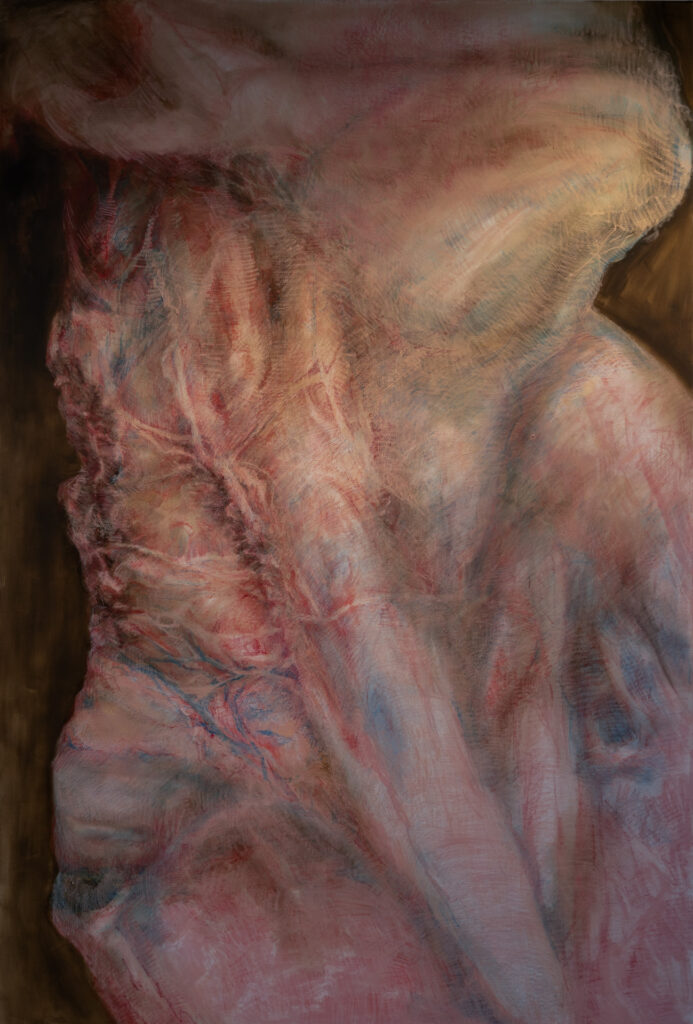
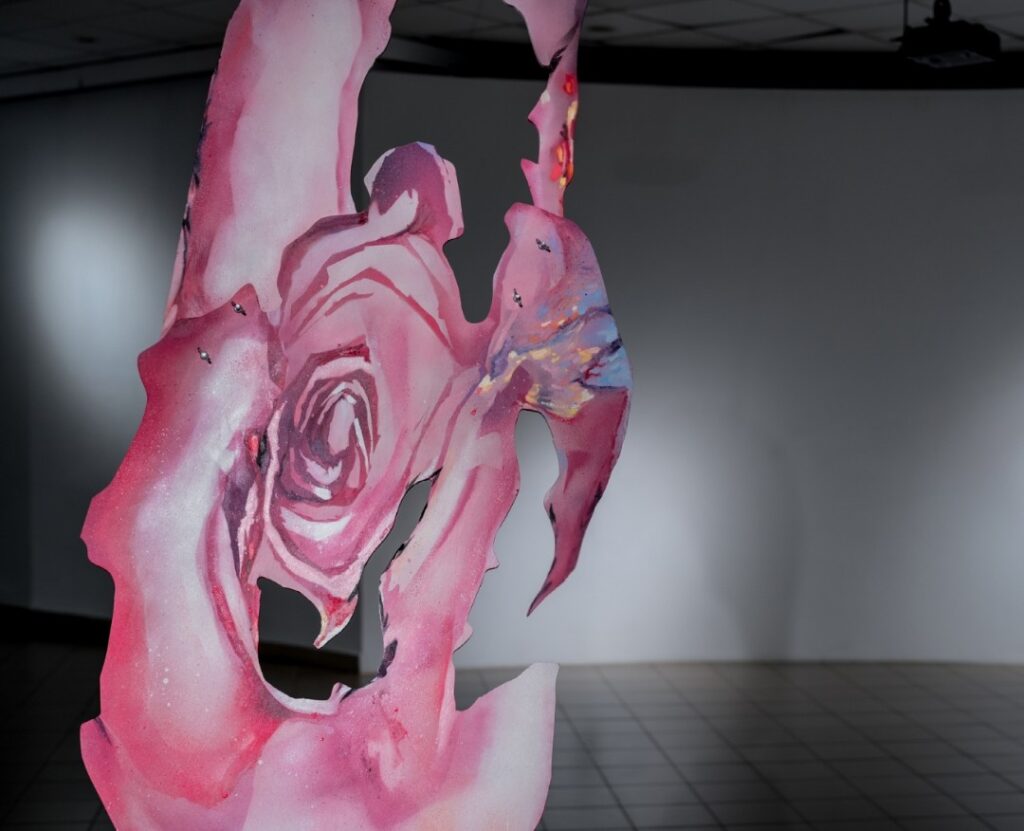
Dzimstna Bērziņa (LV)
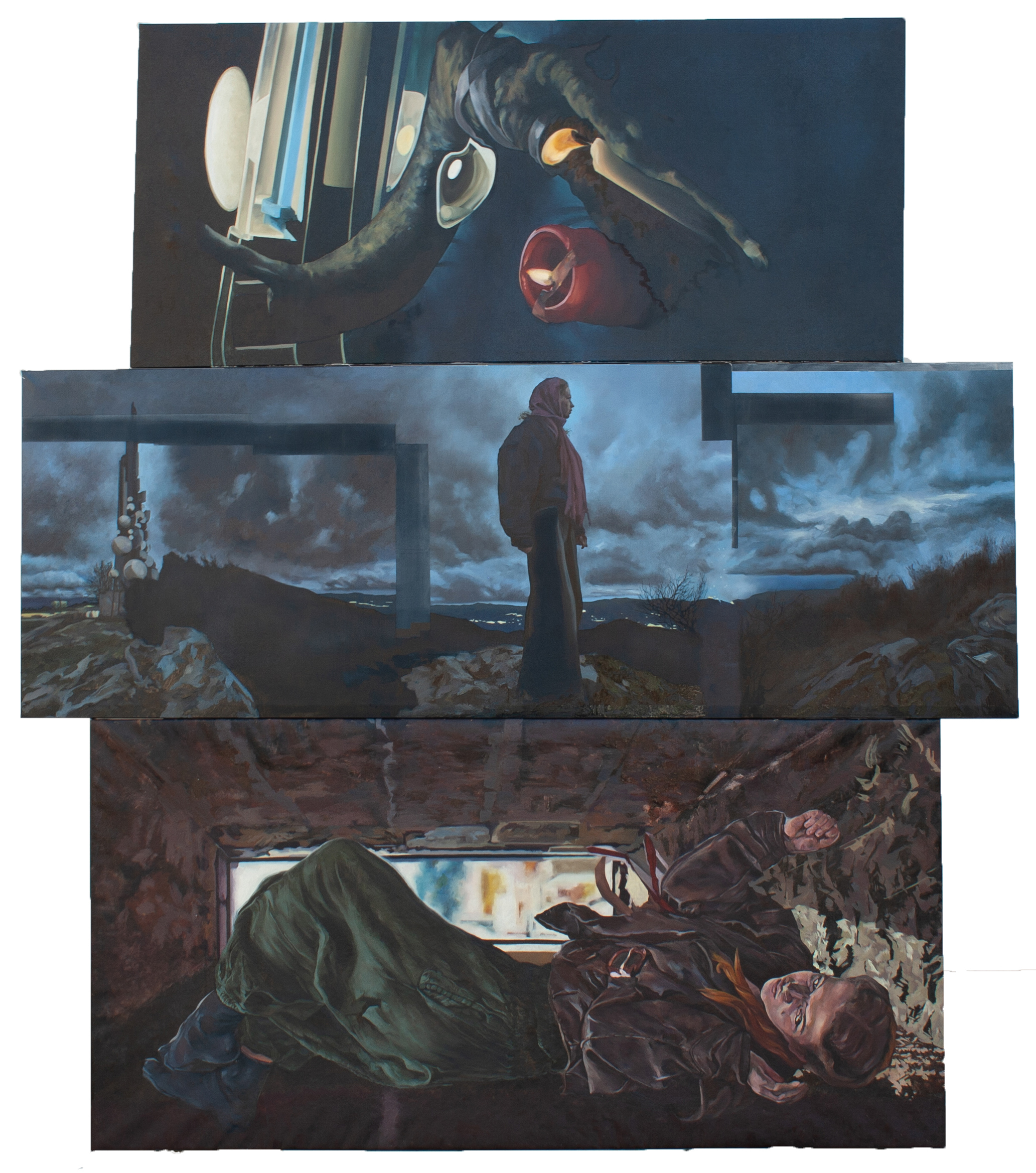
How to Live Now, How to Be
225 × 200 cm overall (individual panels 85 × 170 cm, 70 × 200 cm, 70 × 155 cm) / Triptych, oil on canvas / 2026
How to Live Now, How to Be begins where inherited certainty ends. Human
existence unfolds within structures accumulated across generations: beliefs, traditions,
technologies, institutions, architecture, and ways of understanding the world. These continue
to shape contemporary life, yet the ideas that once gave them purpose have gradually become
inaccessible. The forms remain, while the original reasons for their existence fade from
collective memory. The triptych reflects on what it means to orient oneself within a reality
whose foundations persist, but whose original language can no longer be fully understood.
Rather than presenting a linear narrative, the work explores three interconnected
conditions of human existence. One image inhabits an intimate psychological threshold,
where architecture becomes an extension of consciousness and uncertainty itself forms the
space of experience. Another unfolds within a landscape where natural forms, technological
infrastructure, and abstract architectural elements coexist, suggesting that contemporary life
is shaped by overlapping realities rather than opposing worlds. A third dissolves the
boundaries between body, object, and space, directing attention toward perception itself and
proposing that reality is continually assembled through memory, attention, and
consciousness.
Across the triptych, the human figure is neither hero nor victim, but a witness. Rather
than acting upon the world, the figure observes, waits, moves, and endures. The paintings
shift attention away from external events toward the invisible processes through which
existence is experienced. Memory, perception, belief, desire, and time become the quiet
structures that shape identity long before they become visible in action.
Nature, architecture, and technology are presented not as opposing categories but as
interconnected conditions of contemporary existence. The work resists both nostalgia for a
lost past and faith in technological progress as a source of certainty. Instead, it suggests that
orientation emerges through the continual negotiation between inherited structures and lived
experience. Physical environments gradually become psychological landscapes, while
internal states reshape the experience of external space.
The title introduces the central question of the work. How to Live Now, How to Be
does not ask how certainty might be restored. It asks how one continues after inherited
frameworks no longer provide unquestioned answers. The work understands this condition
not as a crisis unique to the present, but as a fundamental aspect of being human: every
generation inherits worlds it did not build and meanings it can never fully recover.
Rather than offering conclusions, the triptych invites the viewer to inhabit this
uncertainty. It proposes that orientation is not permanently achieved, but continually
negotiated through perception, memory, presence, and experience. In this sense, being is
understood not as a state of resolution, but as an ongoing practice of remaining attentive
within complexity. The question of how to live, and how to be, therefore remains open
because each generation must answer it anew.
(8/25)
